


In the face of fatigue and work demands, choosing the right break becomes strategic. It’s no longer about working more, but about recharging, regaining mental clarity, and improving focus. This article explores the different types of workplace breaks to help you find the one that suits you best, including the Nap&Up solution (micro-nap pods) as a complementary option.
Breaks at the Office: Why They Matter
Working without breaks—or using them poorly—leads to :
A gradual drop in attention and more frequent mistakes.
Accumulated mental and physical fatigue (cognitive load, screen time, posture).
Increased risks to mental health—stress, tension, and difficulty letting go.
Yet, when well-managed, breaks become a time to recharge: they help you reconnect with yourself, regulate stress, and return with improved focus and renewed energy. These benefits come from changing posture, pace, and activity.
Moreover, when effectively structured, a break transforms into a period of regeneration: it offers the opportunity to center yourself, manage stress, and resume work with heightened alertness and restored vitality. These advantages are directly linked to shifts in position, rhythm, and engagement.
Types of Workplace Breaks: Choosing What Works for You
Here’s an overview of the main types of workplace breaks. The idea: understand their features and benefits, and choose the one that fits your needs, pace, and context.
1. The Traditional Break (coffee break, lunch break…)
A break of at least 20 minutes (often 30 to 60 minutes) in the middle of the day, usually to eat, socialize, or get some fresh air.
Benefits :
Physical recharge (food, walking, change of posture)
Opportunities for social interaction, informal connections, and mental relaxation
Clearly separates work time from personal time
Note : For some, this break may lack structure or turn into eating a meal in front of a screen, which reduces its benefits.
When to prioritize ? If your day is fairly linear, you have a lunch or mid-afternoon break, and you can step away from your workstation to refresh yourself.
Tips for HR : Encourage a space for social interaction, free from screens, that supports gentle recovery.
2. Regular Micro-Breaks
Short moments (a few minutes) repeated throughout the day, such as standing up, stretching, looking into the distance, taking deep breaths, or moving around for 1–2 minutes.
Benefits :
Help maintain alertness and prevent cognitive fatigue.
Rest the eyes and reduce headaches, especially if you spend the day in front of a screen.
Break monotony, relieve sitting posture, and give the brain a chance to “breathe.”
Note : This type of break does not replace a longer break—it’s a complement. For creative or demanding tasks, a longer pause is still needed for a true reset.
When to prioritize ? If your work is sedentary, screen-based, or fast-paced (meetings, emails, repetitive tasks). Take a 1–2 minute break every hour or 90 minutes.
Tips for HR : Set up reminders (alarms, visual cues), encourage teams to move together, or establish a small collective ritual. The goal: gentle efficiency, stress regulation, and physical engagement.
3. Power Nap
A longer break (5 to 20 minutes) in a quiet, semi-isolated environment, aimed at deeper mental or physical recovery.
Benefits :
Allows the brain to truly switch off, entering “rest” mode rather than just a pause. Power naps are especially effective for temporary dips in energy or feelings of drowsiness at work.
A 20-minute nap can increase concentration and memory by 35%, enhance alertness, reduce stress, and regulate mood (NASA study, 2019).
When to prioritize ? If employees have long workdays, periods of high cognitive load (screens, decision-making, creative tasks), or fluctuations in alertness (post-lunch, end of day).
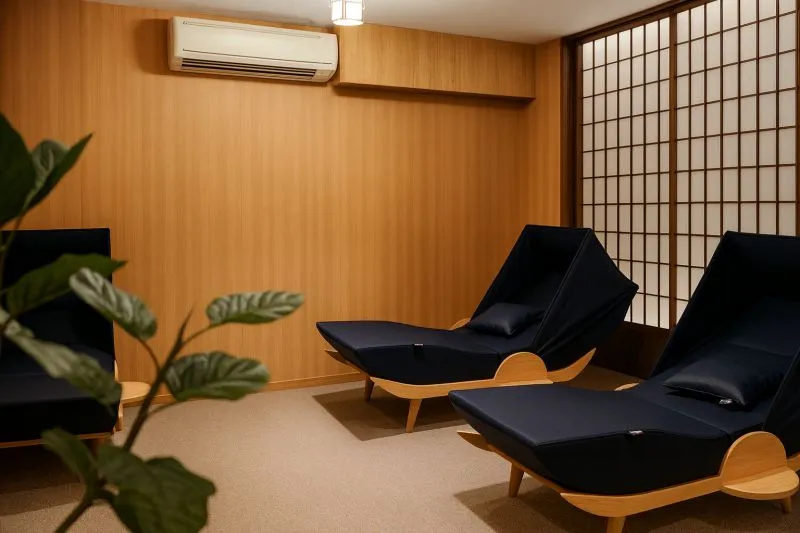
Tips for HR : Offering power nap solutions—such as Nap&Up micro-nap pods—sends a strong wellness signal. It shows that the company values recovery, not just performance.
Tailoring Break Types to Your Work Context
Here’s a selection of questions to help you define the ideal type of break, supporting a better balance between professional commitments and personal life :
What is the rhythm of your day? (continuous work, alternating meetings and focused time, remote work…)
What level of cognitive or physical demand? (screen time, decision-making, interactions, movement)
What signs of fatigue or drop in performance? (body, mind, attention)
What is your company culture? (break allowances, dedicated spaces, role of management…)
What budget or organizational constraints? (space, agreements, setup)
Examples of adapting breaks in a typical workplace environment :
For a team in an open-plan office, mostly at screens: combine micro-breaks every 60–90 minutes with a 30–45 minute lunch break.
For a project team with high creativity demands: schedule a power nap after an intense morning, or offer a structured “recovery time.”
For a remote work setup: encourage employees to stand up or step outside for 2–3 minutes, or create a collective micro-break via video call.
The Nap&Up Solution (Micro-Nap Pods) falls under the power nap category. It does not replace a coffee break or dynamic micro-break, but offers an alternative for employees who need a true moment of disconnection in a calm, protected space. For HR and Workplace Well-Being (QVT) managers, it is recommended to integrate this break option for employees needing deep rest, mental reset, or regeneration. This initiative should be communicated internally to inform staff and reinforces a company culture focused on well-being, balance, and recovery. At the same time, it is important to ensure that this type of break is part of a broader, well-structured QVT program and is not presented as the only way to take a “real break.”